Techniques and Materials
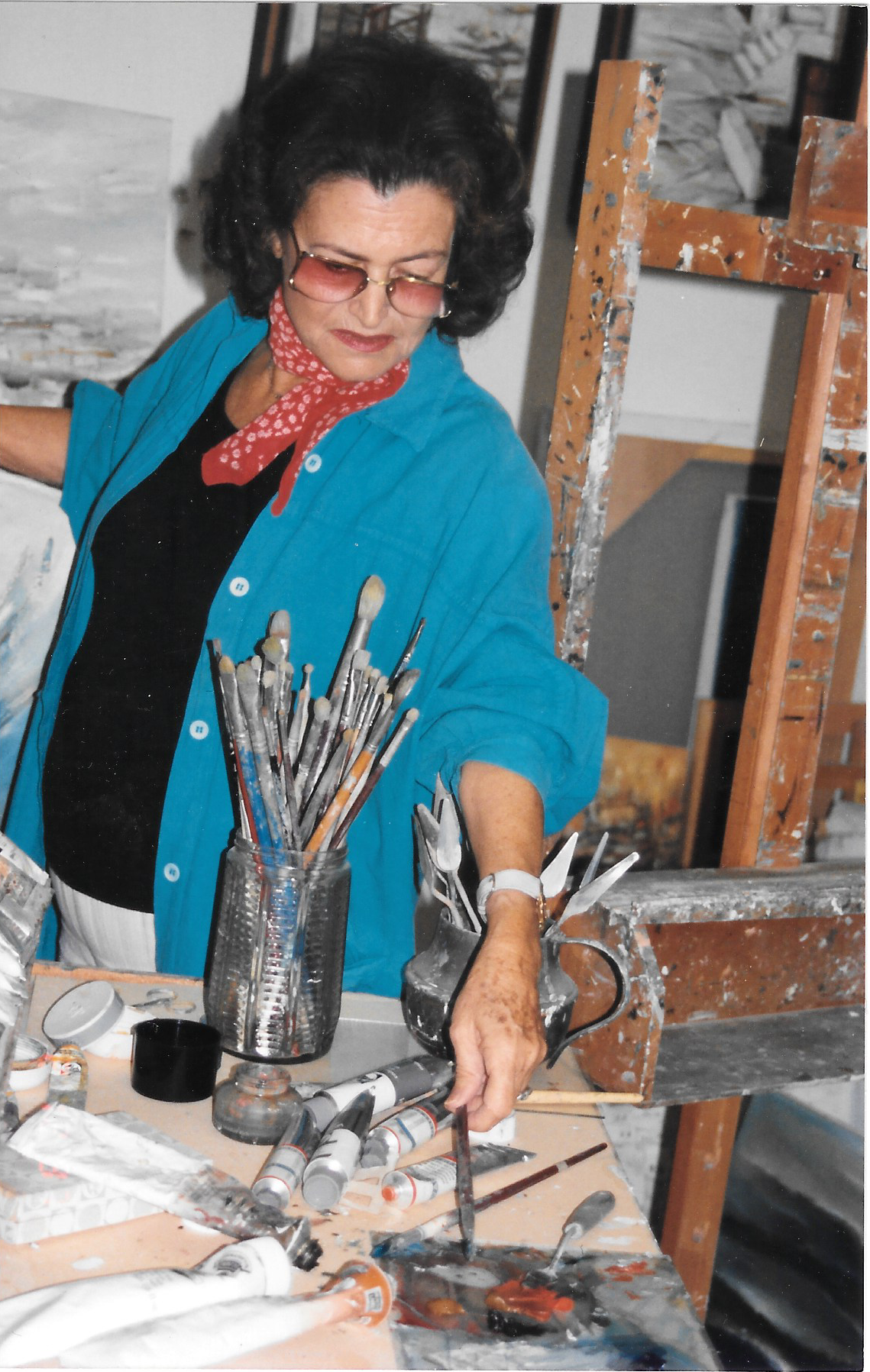
Throughout her decades of creative work, Ahuva Sherman was never content with a single artistic language. She kept searching for new ways to express place, light, memory and emotion — through oil paints, watercolor and pastel, textile works, printmaking techniques and ceramic relief.
Moving between materials and techniques was not merely a change in her way of working. Each material opened up different possibilities of color, texture, transparency, volume and movement, and contributed to her constant development as an artist.
Painting
Painting stood at the heart of Ahuva's work throughout her life. The landscapes of Haifa and the Carmel, Jerusalem, the Galilee mountains, the desert and the Mediterranean appeared in her work again and again, yet changed according to the period, the perspective and the technique she chose.
Oil Paintings
Oil paints allowed Ahuva to build the painting in layers and create depth, texture and rich color. In some works a clear connection to the visible landscape is preserved, while in others the structures and landscapes dissolve into forms, planes of color and more abstract layers.

Watercolor
In her watercolor works, Ahuva used the transparency and lightness of water-based paints. The thin layers of color and the meeting of paint, water and paper allowed her to capture light, atmosphere and a fleeting moment with more sparing and delicate means.

Pastel
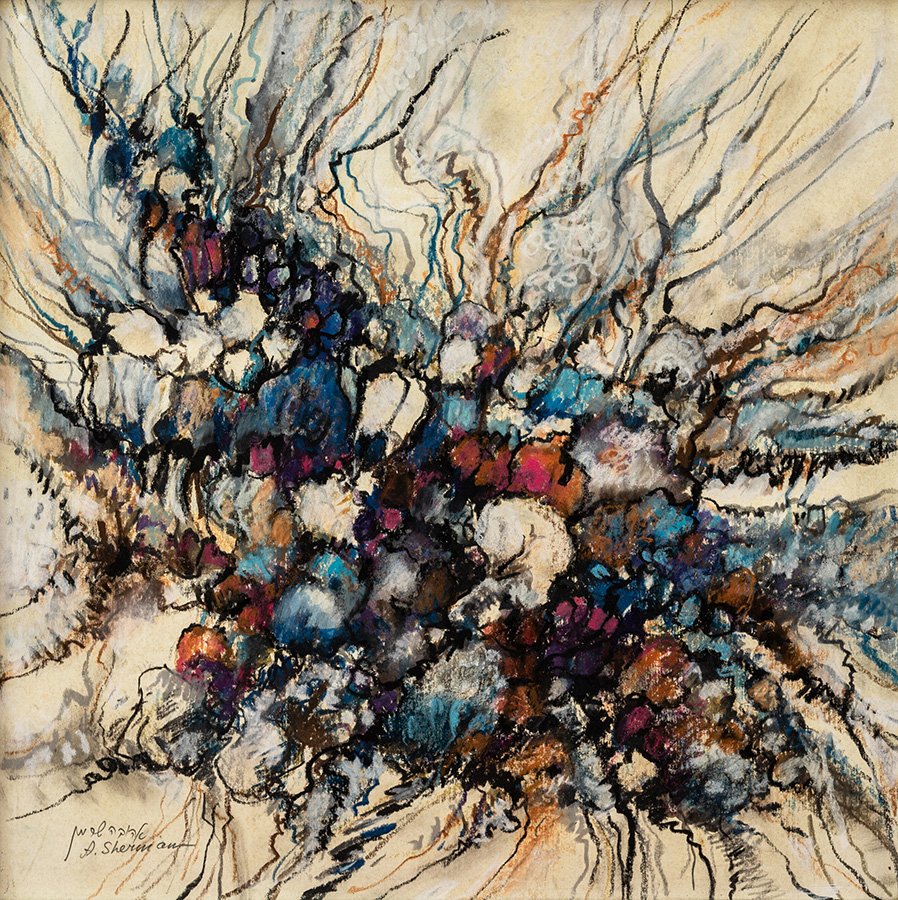
Pastel creates a direct connection between the artist's hand and the working surface. It allowed Ahuva to combine soft color with intense hues, visible lines and broad planes of color. In these works the movement of the hand and the immediate response to sight and feeling are evident.
Relief Wall Tapestries
The wall tapestries are among the most distinctive chapters of Ahuva's work. She developed a personal language of relief textile pieces in which colour, texture and depth come together into a work that shifts with the light and with where you stand.
In them, the landscapes and motifs of her paintings were rebuilt as layered, tactile structures. Several were made on an unusually large scale and installed in institutions and public buildings, turning an entire wall into a work of art.

Original Art Prints
Alongside painting, Ahuva also created original art prints. These are not modern reproductions of paintings, but works created from the outset through artistic printmaking processes.
Silkscreen
In silkscreen printing, each color is transferred separately through a mesh onto the paper. The method enables clear planes of color, graphic combinations and strong contrasts, while building the work precisely layer by layer.
Collagraph
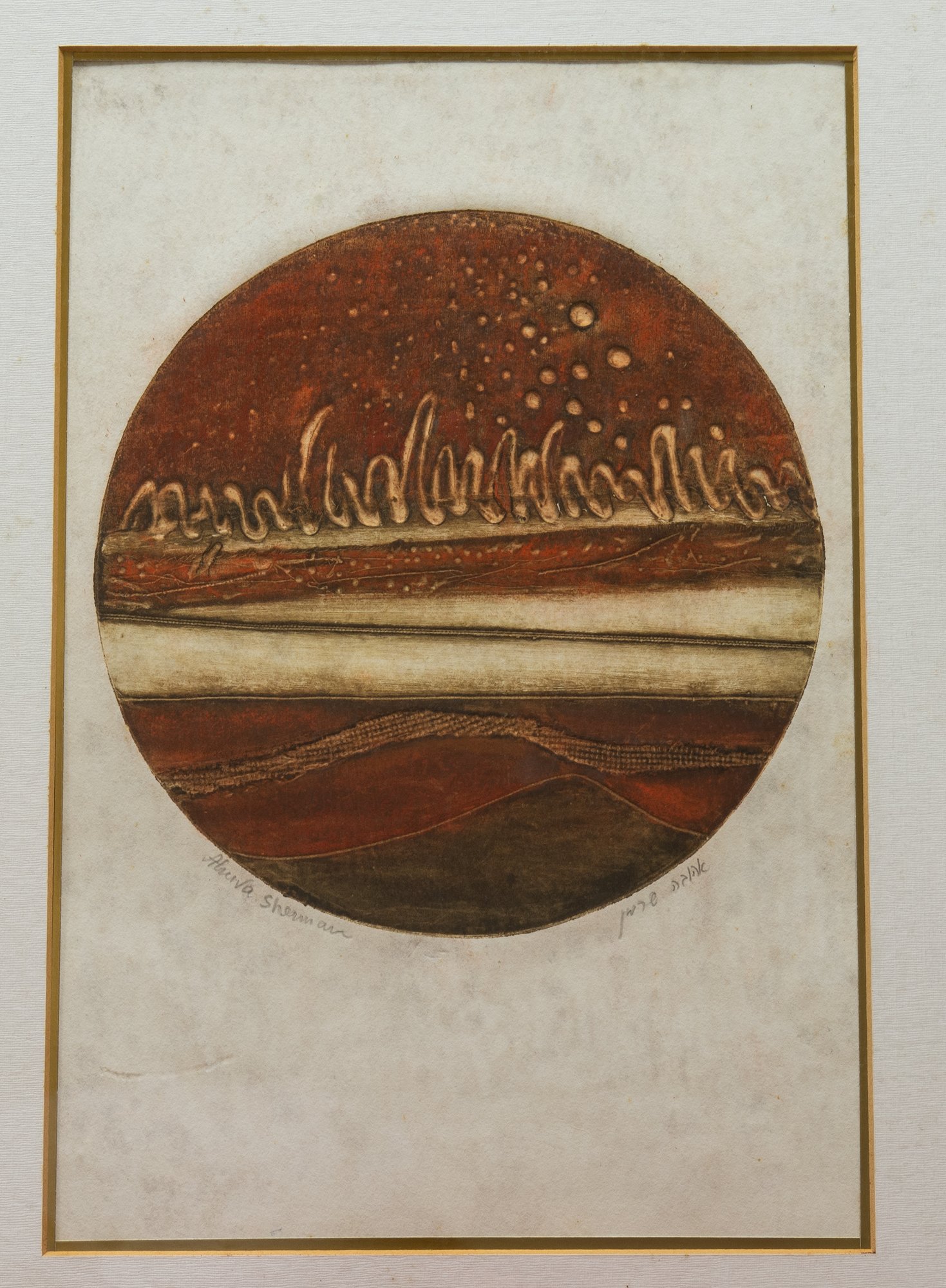
In the collagraph technique, the printing plate is built up from materials and textures attached to its surface. After inking and printing, the result is a work rich in textures, recesses and reliefs, close in spirit to Ahuva's ongoing engagement with layers and material.
Hand-colored Print
On some of the prints Ahuva added color by hand after printing. The hand-coloring gave each copy a slightly different character, turning it into a combination of a printed work and a one-of-a-kind handmade piece.

The Ceramic Facade of the Family Home
In 1974 Ahuva created an extraordinary work three storeys high on the front of the house where the family lived in Haifa. Built from terracotta tiles set at varying heights and depths, it forms a living surface of colour, material, light and shadow.
A sun, a roof beam and the figures of a mother and son emerge from it. Made in the wake of the Yom Kippur War, it carries her longing for home, safety and peace — a singular piece in her body of work, where painting, sculpture, ceramics and architecture meet.
The movement between painting, textile, print and ceramics reflects Ahuva's curiosity and her refusal to repeat the same formula again and again. The techniques changed over the years, but in all of them her love of the land, her sensitivity to light and color, and her unique artistic signature are evident.